

Baby Swings Vs Infant Car Seats Which Should You
When you are preparing for a new arrival, your registry can quickly become a whirlwind of gear. You might find yourself staring at two very different items—a baby swing and an infant car seat—wondering if they serve the same purpose or if you are overcomplicating your nursery setup. As a pediatric OT, I often see parents navigating the fine line between "essential" and "convenient." While both products aim to provide comfort and support for your little one, they serve entirely different roles in your child's development and your family's daily logistics.
This comparison is designed for parents who are trying to prioritize their budget and space without sacrificing safety or developmental needs. It is important to note that these two products are not direct substitutes for one another; an infant car seat is a critical safety tool for travel, whereas a baby swing is a stationary soothing device for the home. In this guide, we will break down the functional differences, safety considerations, and real-world usability of each to help you decide which should be your top priority in 2026.
Affiliate disclosure: if you buy through these links, we may earn a commission at no extra cost to you.

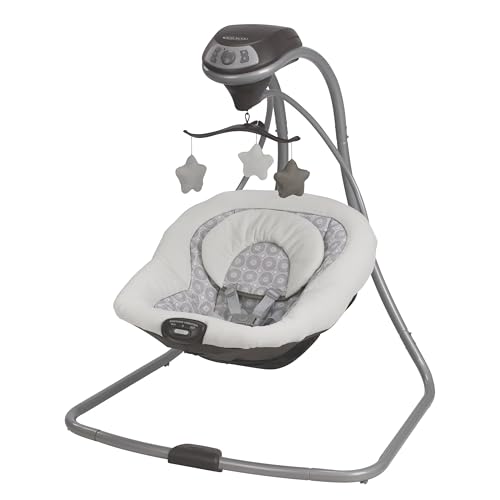
Table of Contents
- Models in this comparison
- Quick Verdict
- About Baby Swings
- About Infant Car Seats
- Head-to-Head: Primary Purpose and Safety Focus
- Head-to-Head: Portability and Weight Considerations
- Head-to-Head: Longevity and Age Range
- Who Should Choose Baby Swings?
- Who Should Choose Infant Car Seats?
- Our Verdict
- Frequently Asked Questions
- Sources & References
Models in this comparison
Affiliate disclosure: if you buy through these links, we may earn a commission at no extra cost to you.

Quick Verdict
Choose Baby Swings if...
- You need a stationary soothing station for supervised playtime at home.
- You are looking for a way to gently rock your baby while keeping them in a stationary environment.
- You want a product specifically designed for supervised, domestic use rather than travel.
Choose Infant Car Seats if...
- You need a primary safety essential for transporting your newborn from the hospital and during daily travel.
- You require a versatile "travel system" that clicks into compatible stroller frames.
- You need a seat that provides a secure, 5-point harness and side-impact protection for vehicle use.
| Factor | Baby Swings | Infant Car Seats |
|---|---|---|
| Primary Purpose | Stationary soothing and supervised play/rest at home. | Safe, mobile transportation and vehicle-based travel. |
| Best For | Hands-free moments while parents manage household tasks. | Travel, errands, and transitioning baby from car to stroller. |
| Setup Complexity | Low; typically involves assembly and plugging into a power source. | Moderate to High; requires precise installation (LATCH/seat belt) to ensure safety. |
| Age Range & Growth | Short-term use; typically outgrown as baby gains core strength. | Birth to approximately 12–15 months (depending on weight/height). |
| Key Advantage | Provides a gentle, rhythmic motion to soothe a fussy infant at home. | Essential safety gear that allows for life on the move with a newborn. |
| Main Drawback | Not for sleep; should not be used as a primary sleep surface. | The weight of the carrier plus baby can exceed 20 pounds during transport. |
About Baby Swings
As a parent, I know that the "witching hour" is real, and sometimes a gentle, rhythmic motion is exactly what a fussy infant needs to settle. Baby swings serve as a stationary soothing station, designed to provide gentle motion that can help keep a baby calm during supervised periods of play or rest. When looking at models like the Graco Simple Sway or the Monamii Bluetooth series, you are essentially looking at a piece of nursery furniture designed for convenience and developmental engagement. Because they are stationary, they often feature adjustable speeds and even music to help soothe a child.
From a developmental and safety perspective, it is vital to remember that swings are not intended for sleep. According to the American Academy of Pediatrics (AAP), flat, firm sleep surfaces reduce the risk of SIDS by up to 50%. While swings are wonderful for supervised interaction, they should not be used as a substitute for a crib or bassinet during nap time. When choosing a swing, consider the weight limits and the ease of cleaning; since babies are prone to spills, look for models with removable, machine-washable fabrics to maintain hygiene.
About Infant Car Seats
While swings are a stationary luxury, infant car seats are an absolute necessity for life on the move. These seats are engineered specifically for newborns and small infants, typically supporting a weight range from 4 to 35 pounds. A key feature of these seats is the detachable carrier, which clicks into a base installed in your vehicle and often into compatible stroller frames to create a seamless travel system. This portability is essential, but parents must be mindful of the "carrier weight" factor: as your baby grows, the combined weight of the infant and the carrier can exceed sizable limits, making frequent lifting a physical challenge.
Safety is the primary driver when selecting an infant car seat. A federally compliant seat must include a 5-point harness, side-impact protection, and clear manufacturer information, including an expiration date. When comparing models like the Graco SnugRide Lite LX or the Baby Trend EZ-Lift™, focus on child fit and installation ease. A critical rule for parents is that the seat must be installed tightly enough that it does not move more than an inch side-to-side at the belt path. Because these seats are used from birth until approximately 12 to 15 months, choosing a seat that accommodates your child's growth trajectory is just as important as its safety rating.
Head-to-Head: Primary Purpose and Safety Focus
When comparing baby swings and infant car seats, it is important to first acknowledge that they serve entirely different functions. An infant car seat is a critical safety device designed for travel, featuring a 5-point harness and side-impact protection to protect your child during vehicle transit. Because they are engineered for crash protection, they are subject to strict federal safety standards and must be installed securely—ensuring the seat does not move more than an inch side-to-side at the belt path. They are essential for life on the go, typically used from birth up to 12 to 15 months.
In contrast, baby swings are stationary nursery items designed for soothing and gentle movement at home. While they offer a place for supervised relaxation, they are not safety devices for travel. From a developmental and sleep perspective, it is vital to remember that according to the AAP, flat, firm sleep surfaces reduce SIDS risk by up to 50%. Therefore, while a swing can be a helpful tool for supervised downtime, it should never be used as a primary sleep surface. Comparing them is not a matter of which is "better," but understanding that one is a necessity for transport while the other is a lifestyle tool for home comfort.
Head-to-Head: Portability and Weight Considerations
The physical weight of these products presents a significant difference in daily use. Infant car seats often feature a detachable carrier that clicks into a base or a compatible stroller frame. A major factor for tired parents is the "carrier weight"—the combined weight of the baby plus the carrier can often exceed 20 pounds. This makes the ease of lifting and maneuvering a critical consideration for anyone frequently moving between a vehicle and a stroller.
Baby swings, while often portable in design, are generally bulkier and less intended for frequent transport outside the home. While some models are lightweight enough to move from room to room, they lack the "click-and-go" functionality of a car seat travel system. When choosing a swing, consider its footprint and ease of moving within your living space, whereas with a car seat, focus on how the carrier weight will impact your ability to carry your sleeping infant safely.
Head-to-Head: Longevity and Age Range
The lifespan of these products varies significantly based on their engineering. Infant car seats are specialized tools with a relatively narrow window of use. They generally accommodate a weight range of 4 to 35 pounds and are typically outgrown as the child reaches 12 to 15 months. Because they are designed to fit the specific proportions of an infant, they must be replaced once the child exceeds the height or weight limits listed on the safety label.
Baby swings often have a different growth trajectory, often serving as a stationary seat for infants until they can sit up independently or reach a certain weight limit. However, because they are not designed for the rigorous safety requirements of vehicle travel, they do not offer the same type of long-term "essential" utility as a car seat. When planning your budget, remember that a car seat is a specialized investment that will need to be replaced as your child grows, whereas a swing is a supplemental piece of nursery gear.
Who Should Choose Baby Swings?
It is important to first note that baby swings and infant car seats serve entirely different purposes. While a car seat is a critical safety device for travel, a baby swing is a stationary piece of nursery gear designed for supervised relaxation and gentle movement at home. Because they are not interchangeable, the choice depends on whether you are looking for mobile safety or stationary comfort.
You should prioritize a baby swing if you are looking for a supervised, stationary soothing station. Swings are ideal for parents who need a safe place to set their baby down during the day to own tasks, provided the child is under constant supervision. They are best suited for the "home life" phase of parenting, offering a way to gently rock an infant while they are awake. When choosing a swing, focus on ease of cleaning and whether the motion settings can be adjusted as your baby grows.
Who Should Choose Infant Car Seats?
An infant car seat is a non-negotiable necessity for any parent planning to transport a newborn in a vehicle. Unlike a swing, a car seat is a specialized safety tool designed to protect your child during travel. You should choose an infant car seat if you need a solution for moving your baby from the nursery to the car, or from the car to a compatible stroller frame.
When selecting your seat, focus on the weight of the carrier and vehicle compatibility. Because the weight of the carrier plus the baby can exceed 20 pounds, ease of transport is a vital factor for tired parents. You should choose a seat that fits your specific vehicle and meets all federal safety requirements, including a 5-point harness and side-impact protection. Remember that infant car seats are typically used from birth to approximately 12 to 15 months, so consider the expected growth of your child when comparing models.
Our Verdict
When comparing baby swings and infant car seats, we are looking at two entirely different categories of gear. A baby swing is a stationary nursery item designed for supervised soothing, while an infant car seat is a critical safety component for travel. Because they serve different purposes, the "winner" depends entirely on your current stage of parenting and your immediate needs.
If you are deciding where to allocate your budget first: The infant car seat is the non-negotiable priority. It is a vital piece of safety equipment required for transporting your newborn from the hospital and during daily travel. According to the National Highway Traffic Safety Administration (NHTSA), a correctly installed car seat can reduce the risk of fatal injury by 71 percent for infants. Because of this, your first purchase should always be a high-quality, federally compliant infant car seat that fits your vehicle and meets your child's growth needs.
If you already have your travel essentials secured: The baby swing is a secondary, lifestyle-based purchase. While a swing can provide much-needed hands-free time for tired parents, it is not a substitute for safe sleep environments. As noted by the American Academy of Pediatrics (AAP), flat, firm sleep surfaces reduce the risk of SIDS by up to 50%. Therefore, a swing should be viewed as a supervised soothing tool rather than a primary sleep solution.
The Bottom Line: Buy the infant car seat first to ensure your baby's safety on the road. Invest in the baby swing only after your essential travel and sleep safety needs are fully met.
Frequently Asked Questions
How long will an infant car seat last?
Infant car seats are designed for a specific developmental window, typically from birth up to approximately 12 to 15 months. Because they are built to accommodate smaller bodies, they are often outgrown relatively quickly as the child grows in height and weight. Once your child reaches the maximum weight or height limits specified on the seat's label, it is time to transition to a different seat.
Can I use a baby swing for sleep?
While baby swings can be helpful for soothing, they are not intended as primary sleep surfaces. According to the American Academy of Pediatrics (AAP), flat, firm sleep surfaces reduce the risk of SIDS by up to 50%. For safe sleep, it is best to use a crib, bassinet, or pack-and-play that meets current safety standards.
What is the most important thing to check when buying a car seat?
Beyond meeting federal safety standards, you should focus on child fit, vehicle compatibility, and installation ease. A seat must be installed correctly in your specific vehicle—meaning it shouldn't move more than an inch side-to-side at the belt path—and it must fit your child's current size and expected growth to be considered the right choice.
Why does the weight of the carrier matter in an infant car seat?
The weight of the carrier is a critical factor for parental ease of use. Because you will often be lifting the carrier with the baby inside, the combined weight of the infant and the seat can easily exceed 20 pounds. Choosing a seat with a manageable carrier weight can significantly impact your daily mobility and comfort.
What safety features should I look for in an infant car seat?
A federally compliant infant seat must include a 5-point harness, side impact protection, a safety sticker, an expiration date, manufacturer information, an owner’s manual, and a registration card. Always verify these requirements and check the expiration date, as plastic can degrade over time, making expired seats unsafe.


